

How to Choose Tasteful Military Apparel for Everyday Wear
Last Updated: November 11, 2026
Quick Summary
Choose tasteful military apparel by favoring restrained designs: small, deliberate graphics tied to a real branch or unit, in colors like navy, olive, or charcoal. Check fabric content, weight, and stitching, confirm the fit allows full movement, and style the piece with plain clothing so the graphic stays the focal point.
- Keep the test simple: would you be comfortable wearing it to a family dinner, job interview, or farmers market?
- Check fiber content, weight, stitching, and print quality before buying, not just the graphic.
- Our Semper Paratus and Haec Protegimus tees use 100% U.S. cotton at 4.45 oz./yd².
- Pick one focal point per outfit and keep pants, shoes, and outerwear in solid, low-contrast colors.
- Do not wear actual medals, ribbons, or rank insignia unless you earned them or are authorized to wear them.
Table of Contents
- What Tasteful Military-Inspired Apparel Actually Means
- Matching Apparel to Its Intended Use and Mission
- Judging Fabric, Construction, and Durability
- Fit, Sizing, and Freedom of Movement
- Using Insignia, Medals, and Service Symbols Respectfully
- Evaluating Military Apparel Brands and Whether Your Purchase Gives Back
- Styling Military-Themed Pieces in Everyday Outfits
- Choosing Your Next Piece Within Your Budget and Wardrobe
- Frequently Asked Questions
What Tasteful Military-Inspired Apparel Actually Means
Tasteful military-inspired apparel is clothing that nods to military service without shouting about it, and this kind of military apparel works best when the design stays restrained. We define it as pieces that honor service through restrained design, clean graphics, and clear meaning, rather than loud slogans or costume-style camouflage.
The difference matters. A subtle skull on a sleeve or a unit crest on a left chest can say more than a full-front graphic with a dozen words. Good pieces let the wearer decide how much to share.
Tasteful usually means:
- Small, deliberate graphics instead of oversized prints
- Symbols tied to a real branch, unit, or mission
- Colors that work in civilian settings, such as navy, olive, charcoal, and black
- Designs that still look right with a jacket, jeans, or work boots
Keep the test simple: would you be comfortable wearing it to a family dinner, a job interview, or a farmers market? If yes, you have found the right balance.
Matching Apparel to Its Intended Use and Mission
Start with the job the shirt needs to do. A piece for a weekend in the yard needs different traits than one for a drill weekend or a veterans' event.
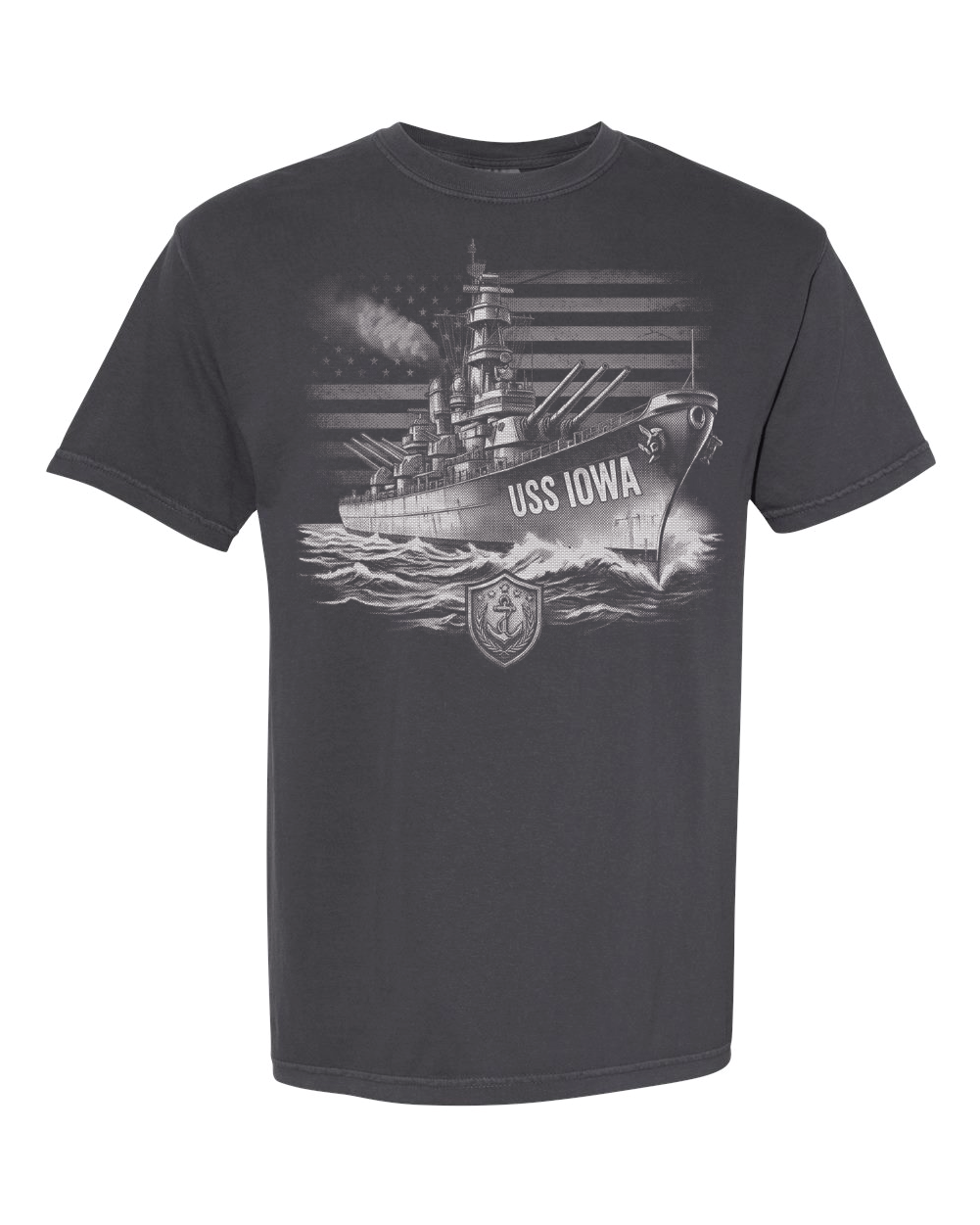
Our U.S.S. Iowa tee is a good example of a mission-inspired design with a clear historical link. It uses a 60/40 ring-spun cotton and polyester blend in a 4.6 oz./yd² weight.
Ask yourself a few questions:
- Will I wear this in public, at work, or only at home?
- Does the design connect to my service, my family member's service, or a broader respect for the military?
- Will the graphic still feel right in five years?
Matching the piece to its purpose keeps your wardrobe honest. Someone who served in the Navy may want a different piece than a civilian who simply supports the community.
Judging Fabric, Construction, and Durability
Fabric decides how a shirt feels and how long it lasts. Look at the material content first, then the weight, then the stitching.
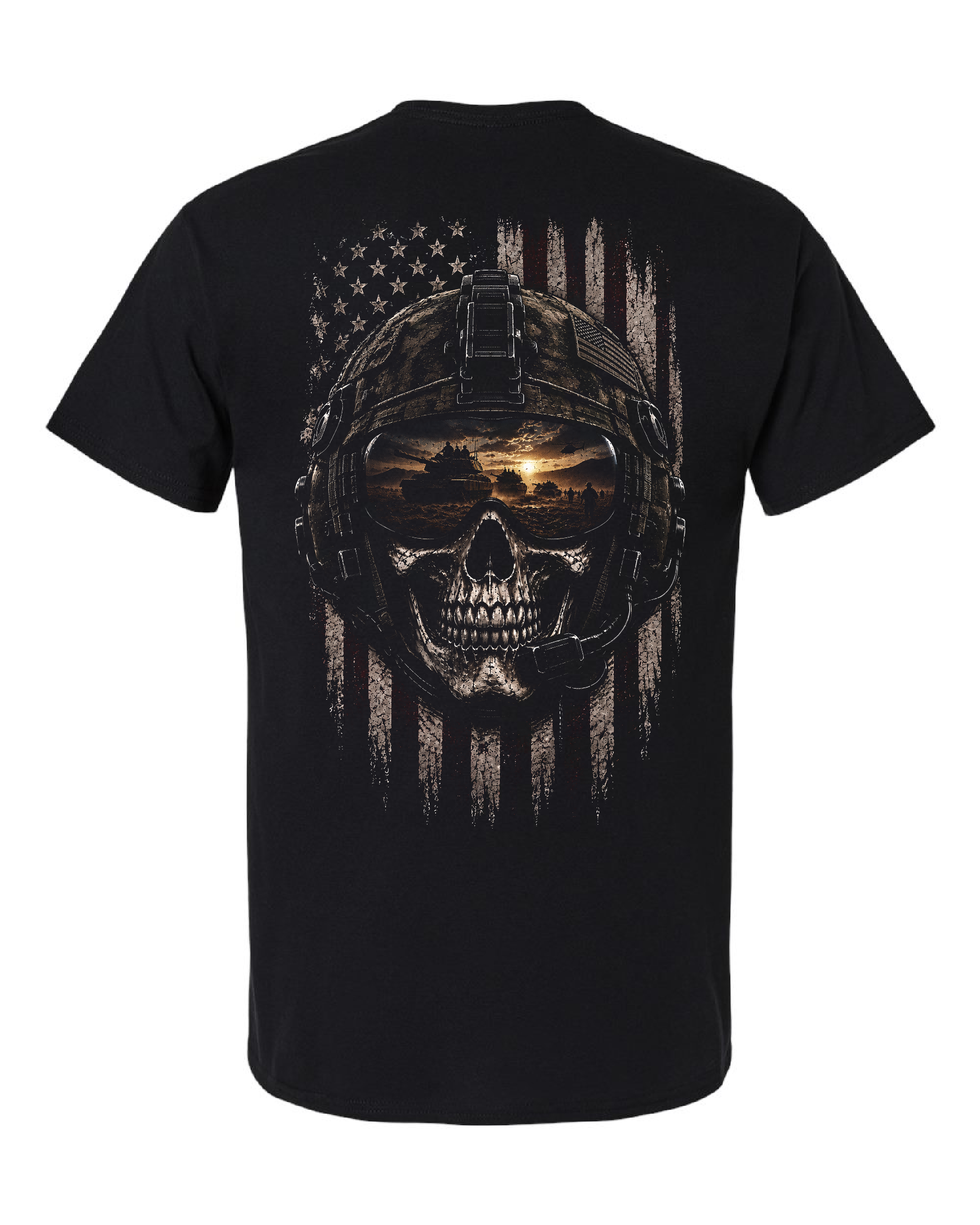
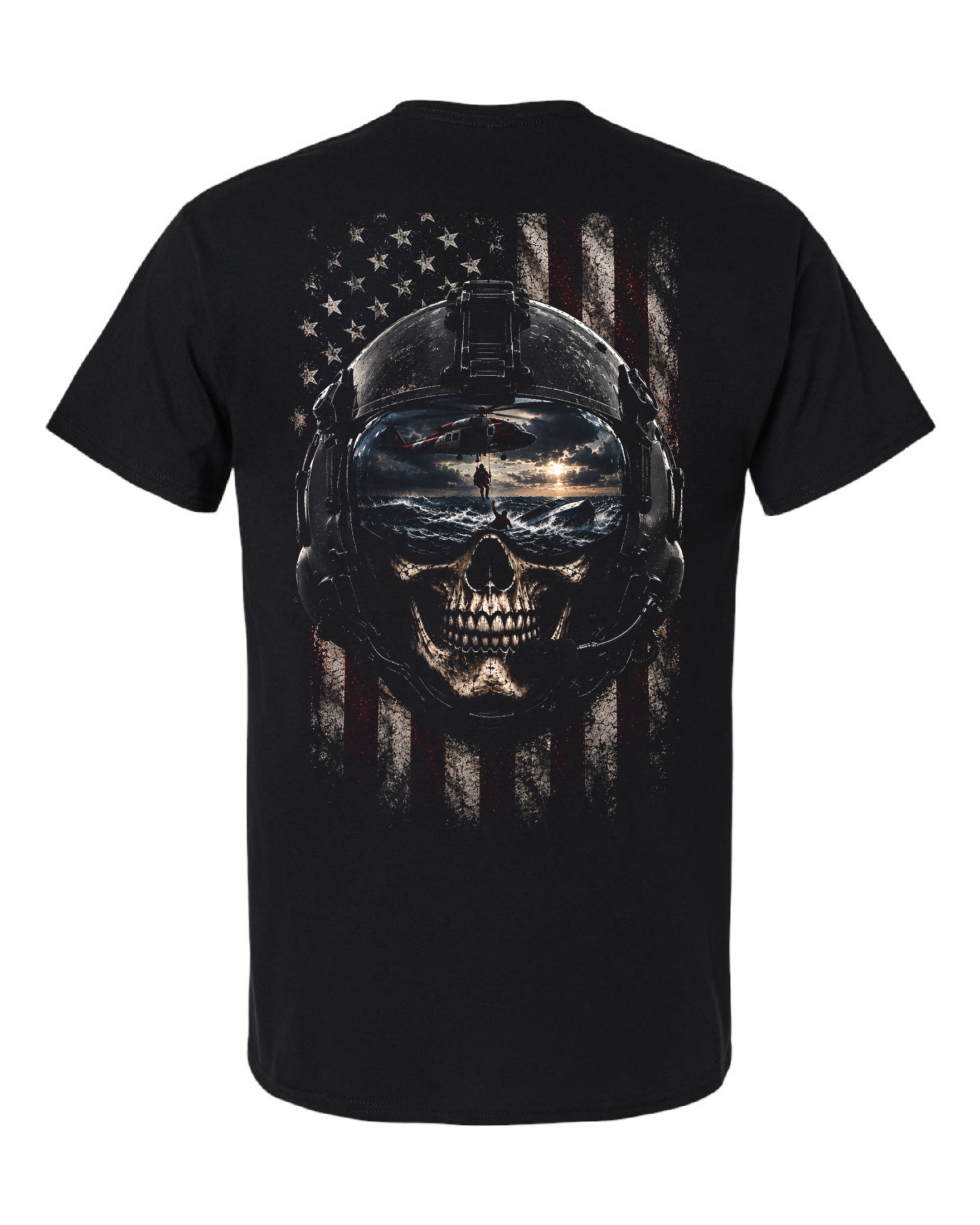
Our Semper Paratus and Haec Protegimus tees are made from 100% U.S. cotton at 4.45 oz./yd². The Per Mare, Per Terram Fortitudine tee uses the same fabric specification.
Quick checks before you buy:
- Fiber content: Cotton and cotton-polyester blends each have different feel and care needs
- Weight: Heavier fabric feels more substantial, while lighter fabric breathes better in heat
- Stitching: Look for neat, even seams at the shoulders and sleeves
- Print quality: Crisp edges and no cracking after a wash are signs of a good print
A common mistake is judging a shirt only by its graphic. A great print on thin, poorly sewn fabric will not survive many wash cycles.
The article's key fabric and construction checks are summarised below for quick scanning.
| Check | What to look for | Why it matters |
|---|---|---|
| Fiber content | Cotton or cotton-polyester blend | Each has different feel and care needs |
| Weight | Heavier fabric feels substantial; lighter breathes | Weight affects comfort in heat |
| Stitching | Neat, even seams at shoulders and sleeves | Signals construction quality |
| Print quality | Crisp edges, no cracking after a wash | Shows the print will last |
Fit, Sizing, and Freedom of Movement
A shirt that fits well moves with you. Check the size chart before ordering, and measure your chest and shoulders rather than guessing from your usual size.
For active wear, pick a fit that allows full range of motion across the shoulders. Tight sleeves restrict reaching and lifting, which matters for anyone doing physical work or outdoor activities.
Practical tips:
- Measure a shirt you already own that fits well, then compare it to the size chart
- Choose a relaxed fit for layering under a jacket or vest
- Pick a slightly fitted cut if you prefer a cleaner silhouette under other clothing
Good fit also helps the design look intentional.
Using Insignia, Medals, and Service Symbols Respectfully
Military symbols carry real meaning. Wearing them respectfully means understanding what they represent and how they are normally worn.
General guidance:
- Know what the symbol means before you wear it, and avoid symbols tied to units you have no connection with
- Do not wear actual medals, ribbons, or rank insignia unless you earned them or are authorized to wear them
- Avoid using symbols in ways that mock service or suggest false credentials
Civilians wearing military-inspired designs are generally welcome in the community, but context matters. A patriotic graphic is different from a costume that implies a rank or award the wearer never received.
If you are unsure, ask a veteran you trust. Most are happy to explain the history behind a symbol and whether a design is appropriate for a particular setting.
Evaluating Military Apparel Brands and Whether Your Purchase Gives Back
Not every military-themed brand works the same way. Some focus on design alone, while others connect purchases to real support.
Alpha Romeo Apparel Company is a dedicated apparel brand that honors the service and sacrifice of military members and their families. Our mission is to evolve into a 501(c)(3) nonprofit that supports veterans and military families through local programs. We are still a for-profit company, and we will share details on our giving practices in the future.
Questions to ask any brand:
- Where is the money going, and can they show you how it is spent?
- What are the returns, exchanges, and shipping terms?
- Is there a clear way to contact customer service if something goes wrong?
A brand worth your money answers these questions plainly. Be cautious of any seller who gives vague answers about where donations go.
Styling Military-Themed Pieces in Everyday Outfits
Military-inspired pieces are easiest to wear when you treat them like any other graphic layer: one strong element, supported by quiet clothing. The goal is for the shirt to look chosen, not like a uniform stand-in.
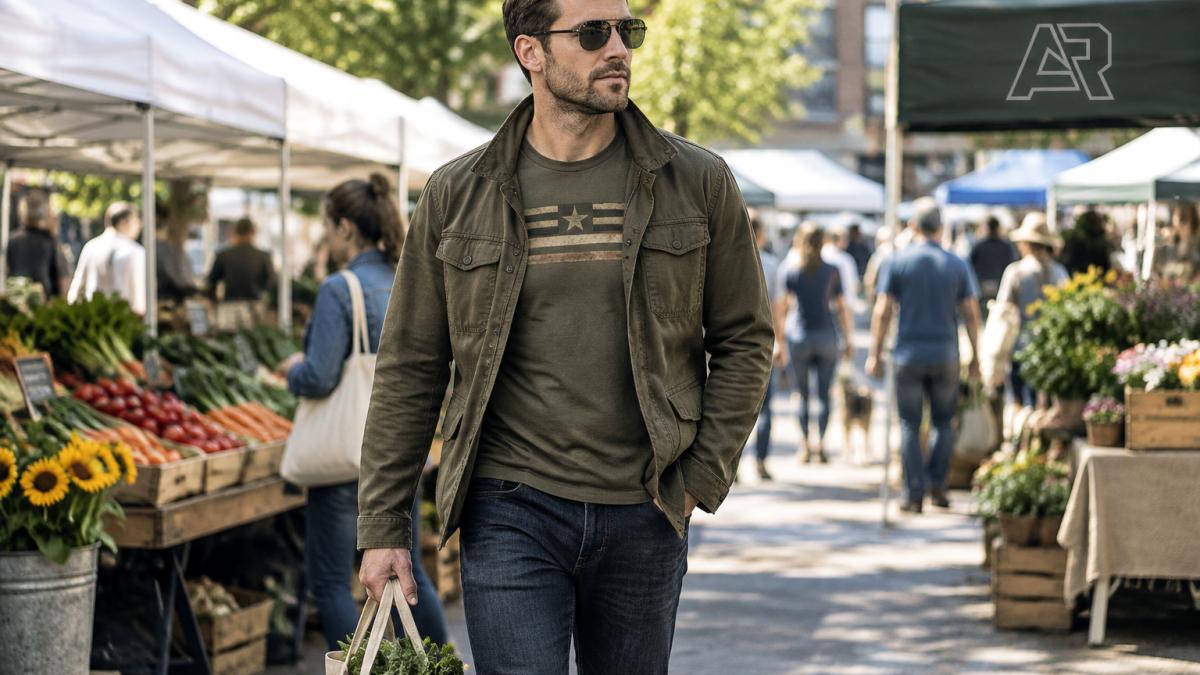
A simple styling rule: Pick one focal point per outfit. If the tee carries the graphic, keep the pants, shoes, and outerwear in solid, low-contrast colors such as navy, olive, charcoal, khaki, or black.
Casual weekend outfit:
- Graphic tee in navy or olive
- Dark indigo or black jeans with a clean hem
- White or gray low-profile sneakers
- Optional: a lightweight field jacket left open
Work-appropriate outfit (for workplaces that allow graphic tees):
- Graphic tee worn under an unstructured overshirt or button-front shirt in a solid color
- Chinos in khaki, stone, or charcoal
- Leather or suede lace-up shoes instead of athletic sneakers
Outdoor or farm outfit:
- Graphic tee as a base layer under a canvas work jacket or quilted vest
- Durable work pants or cargo pants in olive or tan
- Waxed or leather boots with a rugged sole
Watch out: Stacking camouflage, tactical vests, and graphic tees in the same outfit moves the look from tasteful toward costume. Choose one of those elements and let the rest stay plain.
Dressier occasions: A military-inspired piece rarely belongs at a formal event. If you want a subtle nod to service at a dinner or interview, a small embroidered detail on a knit polo or a neutral overshirt is a more restrained choice than a full-front graphic.
Test the finished outfit by asking whether a stranger would read it as a considered look. If the graphic is the only interesting thing about you, simplify the rest; if the outfit looks assembled from unrelated pieces, cut one item.
Choosing Your Next Piece Within Your Budget and Wardrobe
Before buying, decide what job the piece needs to do and how often you expect to wear it. A quick decision framework prevents the common pattern of buying several similar graphics that then sit unused.
Step 1: Count what you already own. Look for gaps in your basics, such as a plain tee in a neutral color, a layering piece, or a pair of boots. A military-inspired piece works best as an addition to a wardrobe that already functions.
Step 2: Choose the category by use.
- Tee: Best for everyday wear and layering under jackets; lowest cost per wear for most people
- Jacket or overshirt: Best for cooler weather and outdoor use; more useful if you need warmth
- Boots or footwear: Best for work and outdoor use; invest here only if you will wear them regularly
- Accessories (hats, patches, pins): Best as small, low-commitment ways to show support without a full outfit change
Step 3: Check the wardrobe fit. Ask whether the piece pairs with at least three items you already own. If it does not, it is likely a one-off purchase.
Step 4: Estimate cost per wear. The sticker price matters less than how often you will wear the piece. A $25.00 tee worn twenty times costs $1.25 per wear; the same tee worn twice costs $12.50 per wear. Buying fewer, better-made pieces usually lowers this number over time.
Current catalog examples:
- U.S.S. Iowa T-shirt: A mission-inspired naval design suited to layering
- Semper Paratus T-shirt: A Coast Guard-inspired piece for warmer weather
- Haec Protegimus T-shirt: An Army-inspired design for everyday wear
- Per Mare, Per Terram Fortitudine T-shirt: A Marines-inspired piece for casual outfits
Keeping one piece in good condition for years is usually more sustainable than replacing it each season.
If you are buying a gift for someone who recently left service, consider their everyday style first. A simple, understated design is often better received than a loud one, and the gift should fit their wardrobe rather than replace it.
Ready to find a piece that fits your style and your respect for service? Shop by Collection to browse our current designs, or start with the U.S.S. Iowa tee that reflects the mission and history behind it. Alpha Romeo Apparel Company makes it easy to choose apparel that honors those who serve.
Frequently Asked Questions
How do you choose military-inspired clothing that looks tasteful?
Start with restraint. Choose a simple graphic, a muted color palette, and a clean fit rather than large slogans or heavy insignia. Look for a design that would still make sense to someone who has never served, since that is how most people will read it in everyday settings. Check fabric weight and stitching before the graphic: a well-made shirt in a simple design tends to age better and look more intentional than a loud print on thin cotton. Avoid pieces that imitate a full uniform, because the goal is to suggest service and identity, not to dress as if on duty.
Is it appropriate for civilians to wear military-inspired clothing?
Yes, when it is worn with respect. Civilians who support veterans and military families commonly wear patriotic and service-themed apparel, and many wear it to honor a relative or friend who served. The main considerations are avoiding the appearance of claiming rank, unit membership, or decorations you did not earn. Real medals, ribbons, and rank insignia are generally reserved for the people who earned them, so stick with graphics and wording that express support rather than personal credentials. Wearing a piece as a gift for a service member is a common and well-accepted way to show support.
What details should you avoid on military-inspired clothing?
Be cautious with anything that could be mistaken for official rank, unit identification, or decorations. Replicated medals, rank chevrons, and unit patches that look authentic can read as misrepresentation, especially when worn in civilian settings. Also avoid designs that glorify violence or sit too close to a costume, such as full camouflage head-to-toe or heavy distressing meant to look like combat wear. Subtle references, like a flag, a branch name in clean lettering, or a simple emblem, usually read as respectful.
How should military-themed clothing fit?
Fit should look like everyday clothing, not a uniform. For t-shirts, choose a cut that sits comfortably through the shoulders and chest without clinging or billowing, and check the length so it covers the waistband when you raise your arms. Use the brand's size chart and measure a shirt you already own that fits well, since sizing varies between manufacturers. Enough room to move your arms freely matters more than a precise slim or relaxed label.
