

Military History Graphic Shirts: Meaning Behind the Designs
Last Updated: November 14, 2026
Quick Summary
Military history graphic shirts often reference a specific era, branch or event through elements like helmets, unit crests, flags and mottos. Reading those details lets a wearer explain what the design means, and checking dates and insignia against official sources helps keep the message accurate.
- Check any date, number or insignia against the branch or unit's official published history.
- Read three things: the branch or unit referenced, the era the style suggests, and whether the imagery conveys a clear message.
- Choose designs that show clear intent rather than generic camouflage, especially when wearing a tactical-inspired print.
- Our shirts use 100% U.S. cotton Gildan 4.45 oz./yd² fabric in a relaxed cut that keeps the design readable.
Table of Contents
- Why Military History Graphic Shirts Carry More Than Decoration
- A Timeline of Military Clothing and Graphic T-Shirt History
- Reading the Common Symbols: Flags, Helmets, Skulls and Unit Marks
- Fact-Checking Dates, Insignia and Historical Claims on a Shirt
- Vintage, Retro and Camouflage Styles: Accurate Inspiration vs. Costume
- Wearing Military-Themed Apparel Respectfully
- Choosing a Shirt That Lasts: Print Quality, Cotton and Fit
- Choosing Your Next Shirt From the Semper Paratus, Haec Protegimus, Per Mare and Custodes Stellarum Designs
- Frequently Asked Questions
Why Military History Graphic Shirts Carry More Than Decoration
Military history graphic shirts are often dismissed as simple patriotic merchandise, but the best designs carry real historical references. A helmet, a unit crest or a motto can point to a specific era, branch or event. Reading those details is what separates a shirt that celebrates service from one that only borrows its look.
Our goal is to make each graphic something a wearer can explain, not just recognize. That matters most when a shirt is worn to a reunion, a memorial event or a family gathering, where someone is likely to ask what the design means.
Understanding the meaning also helps you avoid errors. A date printed incorrectly or an insignia from the wrong unit can undercut the message a shirt is meant to send. Knowing what to look for lets you choose designs that hold up to a closer look.
A Timeline of Military Clothing and Graphic T-Shirt History
The graphic T-shirt did not arrive fully formed. It came out of military clothing systems, surplus markets, and printing technology, and each stage left a mark on the designs sold today. A short timeline makes it easier to judge whether a shirt's vintage styling reflects a real lineage or just borrows the look.
Late 1800s to early 1900s: the undershirt. Union suits and two-piece cotton undergarments were standard issue for soldiers and sailors. These were underwear, not outerwear, and they were plain. The idea of a soft cotton shirt as a visible garment came later.
World War I: the crew-neck takes hold. Soldiers in Europe were issued light cotton undershirts, and the crew-neck style spread as troops wore them in warm conditions. The shirt was still utilitarian, but it was now associated with service.
World War II: the T-shirt becomes standard issue. The Navy and Army issued cotton undershirts as part of standard uniforms, and service members wore them off-duty as well. The shirt's association with military service was fixed in the public mind during this period.
Post-1945: surplus and civilian adoption. Surplus clothing entered the civilian market after the war, and veterans and civilians alike wore military-style undershirts and outerwear. The plain T-shirt moved from underwear to everyday wear.
1950s to 1960s: screen printing and the graphic shirt. Screen printing made it possible to print bold, multicolor images on fabric at low cost. The T-shirt became a surface for messages, and military imagery, flags, unit marks, aircraft, and slogans, began appearing on civilian shirts.
1970s to 1980s: vintage and retro styling. Designers borrowed the typography, color palettes, and poster layouts of earlier decades. Some of this was homage; some was invented nostalgia. The distinction between accurate period styling and costume begins here.
1990s to today: unit marks, branch emblems, and tactical prints. Modern graphics mix official insignia with poster-style art and camouflage patterns.
This lineage explains why so many designs blend official insignia with poster-style artwork. Some draw on World War-era recruiting and bond posters, others on modern unit marks. Tracing that lineage helps you judge whether a design is a respectful homage or an invented costume.
Watch out: a shirt that claims a specific wartime date or unit lineage should be checked against the branch or unit's own published history, because retro styling often mixes eras that never overlapped.
Reading the Common Symbols: Flags, Helmets, Skulls and Unit Marks
Most military graphics rely on a small set of recurring symbols, and each one carries a history that a buyer can learn to read. Knowing the origin of a symbol helps you tell a considered design from a decorative one.
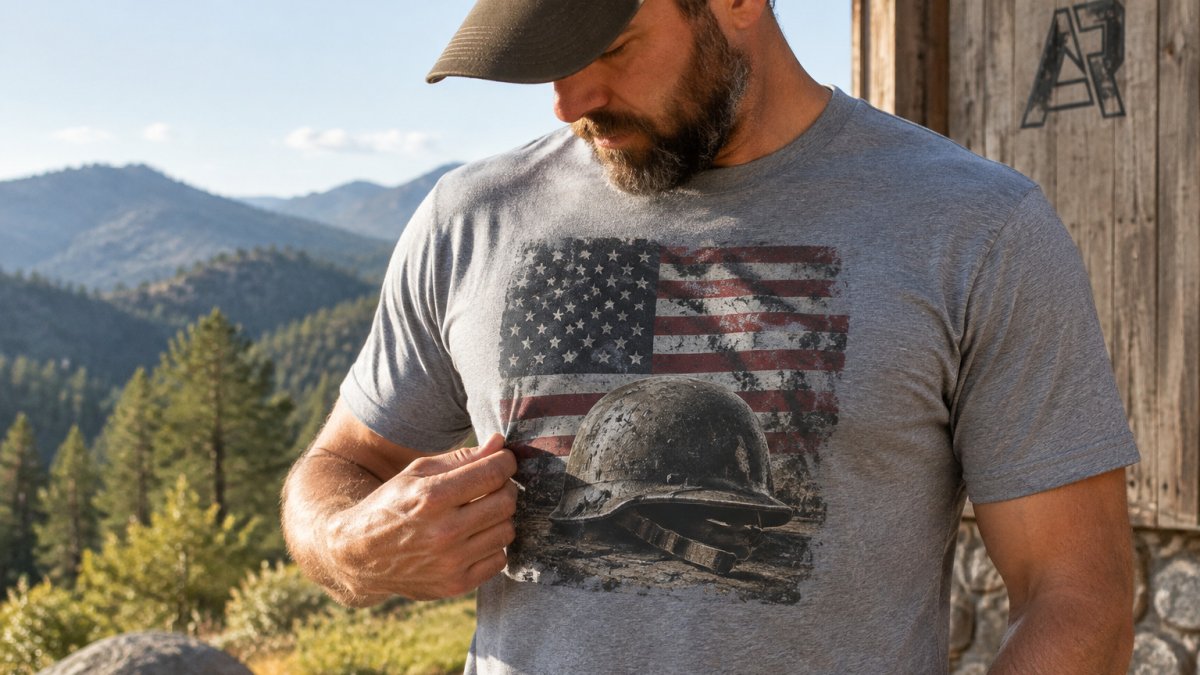
The flag. The United States flag is the most common element, and its treatment matters. A flag rendered in correct proportion and orientation reads as a statement of national identity. A flag with the canton on the wrong side, or with an invented number of stars or stripes, is a sign the designer worked from memory rather than a reference.
The helmet. A helmet usually references infantry or combat service, but the type matters. The M1 steel helmet of World War II and Korea, the modern combat helmet, and the paratrooper's helmet each point to a different era. A design that pairs a World War II helmet with a modern unit mark is mixing periods, which is common in retro styling but worth noticing.
The skull. The skull is a traditional mark of fearlessness and remembrance, and it appears in unit insignia across branches. It is also the most easily misused symbol on a shirt, because it can read as aggression rather than remembrance. Context, a unit name, a date, a motto, is what separates the two.
Unit marks and branch emblems. These identify a specific service or unit, so their accuracy matters most. A crest with the wrong number of stars, a mislabeled branch, or a motto assigned to the wrong service is a factual error, not a stylistic choice. Branch and unit histories are documented by the military services themselves, and their websites are the most reliable place to confirm a founding year or the correct form of a crest.
A quick way to read a design is to ask three questions: which branch or unit does the graphic reference, what era does its style suggest, and does the imagery support a clear message. When those answers line up, the shirt is usually well conceived.
Branch Mottos and What They Translate To
Many branches use Latin or short mottos that appear on graphics. Knowing the translation lets you match the words to the design.
- Semper Paratus ("Always Ready"), associated with the Coast Guard
- Haec Protegimus ("We Protect These"), associated with the Army design we carry
- Per Mare, Per Terram Fortitudine ("By Sea, By Land, Fortitude"), associated with the Marines
- Custodes Stellarum ("Guardians of the Stars"), associated with the Space Force
Watch out: a motto printed in the wrong case or with a misspelled word is a common error on inexpensive graphics, and it is the first thing a service member will notice.
Fact-Checking Dates, Insignia and Historical Claims on a Shirt
Before buying, check any date, number or insignia against an official source. Branch and unit histories are documented by the military services themselves, and their websites are the most reliable place to confirm a founding year or the correct form of a crest.
Be cautious with slogans or claims that a shirt makes about history. If a graphic states a specific event or date, verify it.
Vintage, Retro and Camouflage Styles: Accurate Inspiration vs. Costume
Vintage and retro styling can make a shirt feel authentic, but there is a difference between inspiration and costume. Accurate inspiration borrows a period's typography, color palette or poster layout while keeping the historical details correct. Costume uses those surface cues to suggest a history the design does not actually reflect.
Camouflage patterns follow the same logic. Tactical-inspired prints are popular, but a pattern is most meaningful when it matches a real uniform the wearer has a connection to. Choose designs that show clear intent rather than generic camo.
Wearing Military-Themed Apparel Respectfully
Respect shapes how these shirts are worn. Many people feel most comfortable wearing designs connected to their own service or to a family member who served. Civilians can wear military-themed apparel as a sign of support, especially when the design is tasteful and the context is appropriate.
Avoid wearing insignia from a unit or branch you have no connection to in ways that could suggest a service record you do not have. Subtle designs, such as a small crest on a sleeve, often read as more respectful than large, aggressive graphics. A useful test is whether the shirt would still feel appropriate if someone who served asked you about it.
For a deeper look at choosing tasteful military apparel for everyday wear, see How to Choose Tasteful Military Apparel for Everyday Wear.
Choosing a Shirt That Lasts: Print Quality, Cotton and Fit
A graphic shirt is only as good as its print and fabric.
Fit matters as much as print. A shirt that is too tight can distort the graphic, while a relaxed cut keeps the design readable. Check the size chart before ordering and choose the fit that suits how you plan to wear it.
Our shirts use Gildan 4.45 oz./yd² (US) fabric and 100% U.S. cotton, with a 30-single construction.
The article points to a few specifications that shape how a graphic shirt wears and holds up.
| Spec | Value | Note |
|---|---|---|
| Fabric weight | 4.45 oz./yd² (US) | Gildan fabric |
| Cotton | 100% U.S. cotton | Natural fiber |
| Construction | 30-single | Shirt yarn count |
| Fit | Relaxed cut | Keeps the design readable |
Choosing Your Next Shirt From the Semper Paratus, Haec Protegimus, Per Mare and Custodes Stellarum Designs
Each of our current designs suits a different kind of wearer, so choose by the message you want to carry. Each of these shirts is priced at $25.00.
Custodes Stellarum features a flag, helmet, skull and Space Force mark. It suits anyone who wants a modern take on military identity.
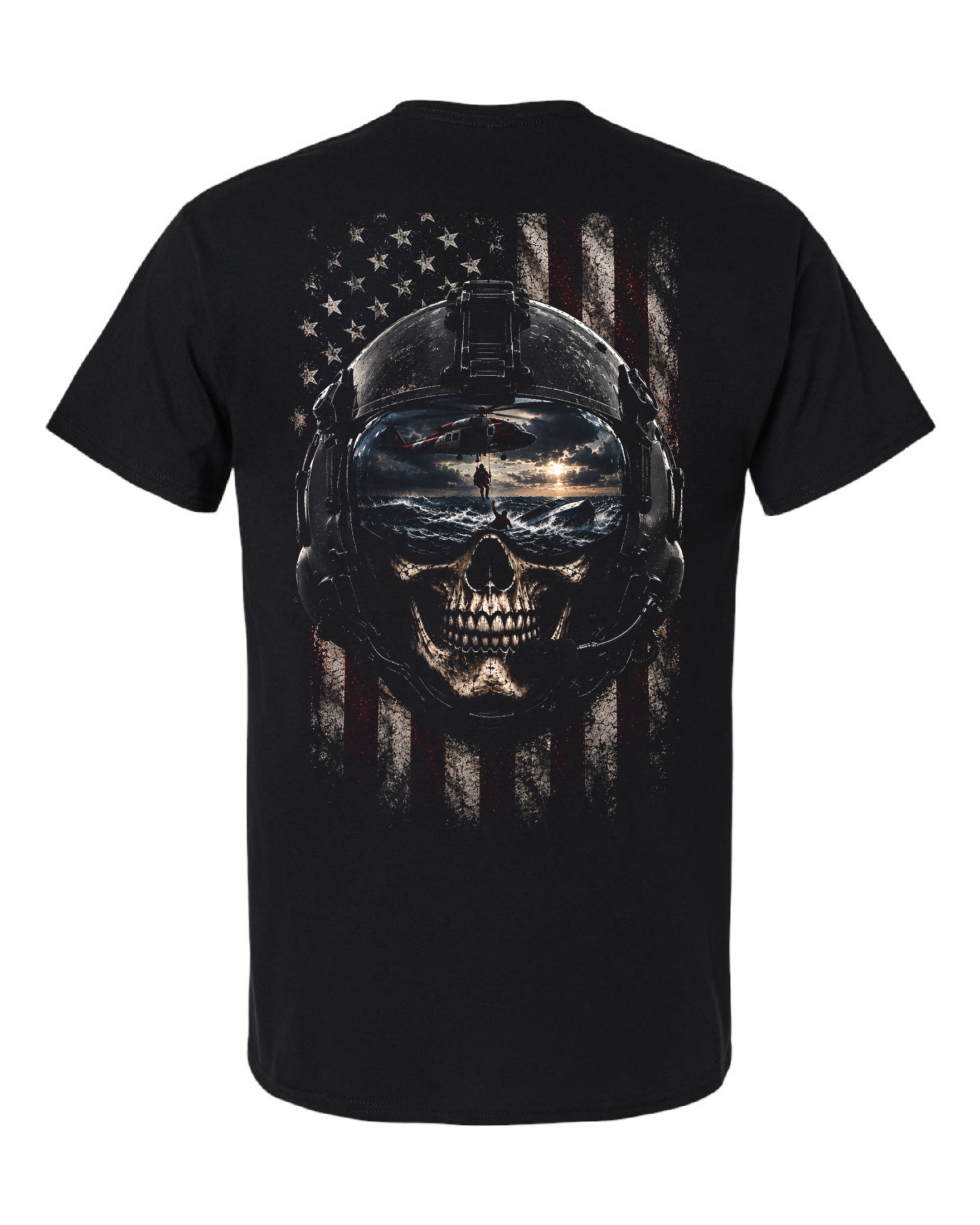
Semper Paratus features a Coast Guard design with flag, helmet and skull elements. It fits those who connect with the Coast Guard's motto and mission.
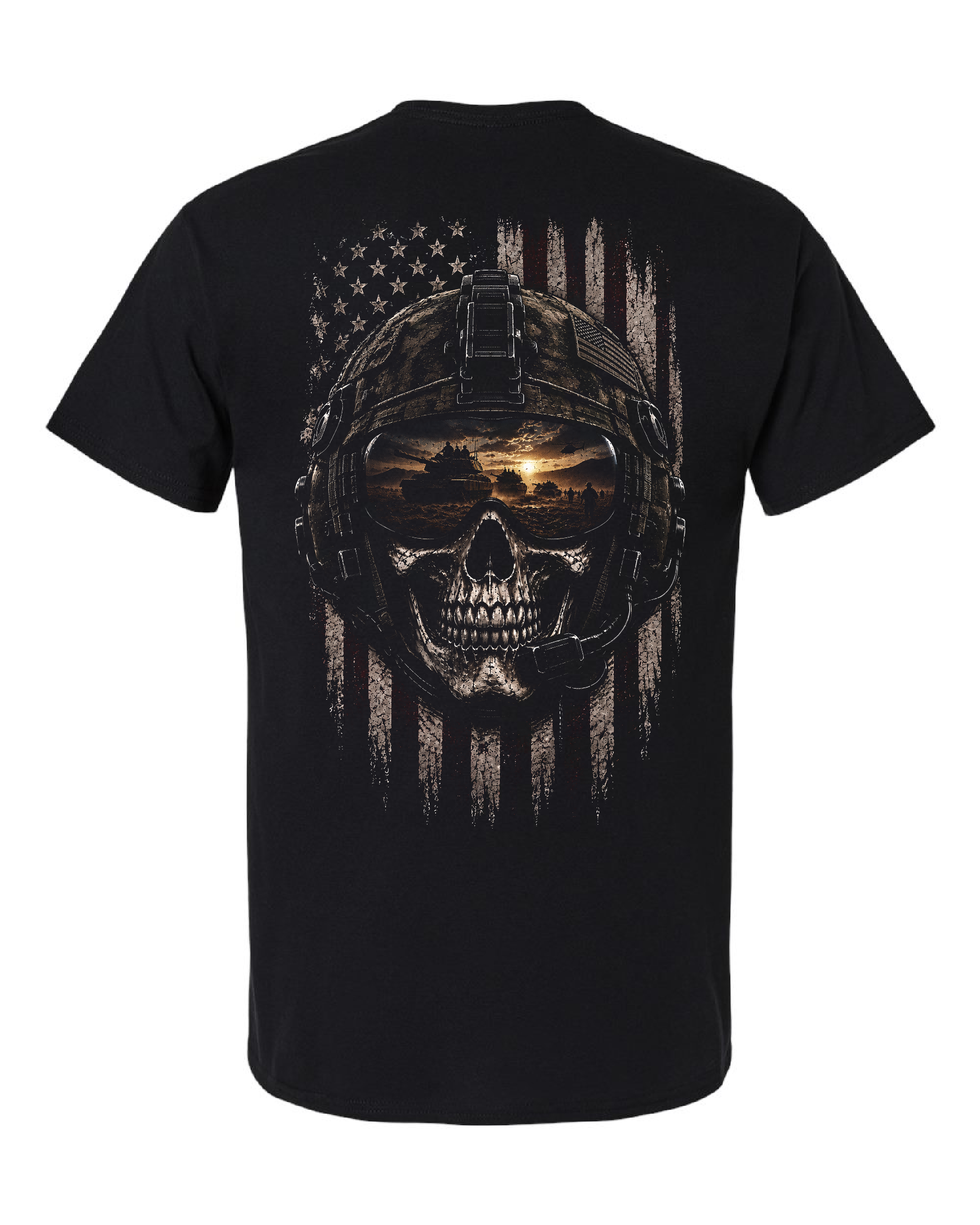
Haec Protegimus features an Army design with flag, helmet and skull elements, a good pick for Army families and veterans.
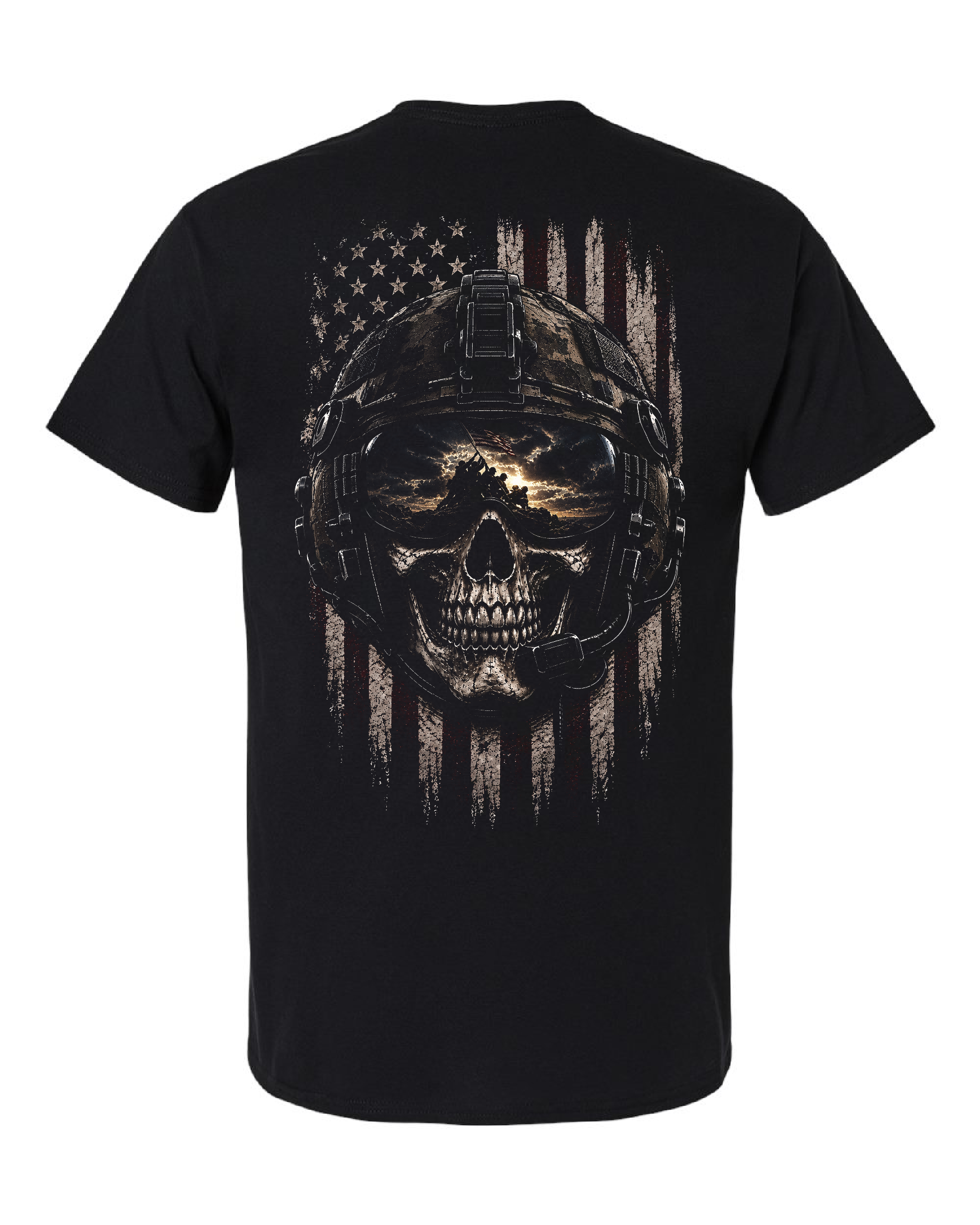
Once you have a favorite, you can also explore the Per Mare, Per Terram Fortitudine shirt, which carries the Marines' motto and a matching graphic.
Shop by collection to compare the full range and find the design that fits your story.
Frequently Asked Questions
What is the meaning behind a graphic t-shirt?
A graphic T-shirt's meaning comes from its symbols, text and era. Flags, helmets and skulls usually signal service pride, remembrance or a unit's identity, while a date or motto anchors the design to a specific history. Check the wording and imagery against a reliable source before assuming the design reflects a real unit or event. Designs that combine a flag with a helmet are typically meant as a general tribute to service rather than a depiction of one historical battle, so read the full graphic before deciding what it represents.
How can I tell whether a military graphic shirt accurately represents history?
Start with the dates, insignia and unit names printed on the shirt and confirm each one against an official source such as the branch's history office or a museum archive. Look for inconsistent details, such as a unit name paired with a founding date that does not match its records. Accurate designs usually name their references clearly, while vague or mismatched details suggest the graphic was made for style rather than history. Compare vintage-styled designs with photographs of real uniforms from the same period.
How can I wear military-themed clothing respectfully?
Wear military-themed shirts as an expression of support, not as a claim to service you did not perform. Avoid wearing unit insignia or a veteran identity you have not earned, and do not use military symbols in ways that mock service or sacrifice. Wearing a shirt to honor a family member, to show support at a community event or as a gift for someone who served is generally appropriate. When in doubt, ask someone who served what they think of the design.
What should I look for when choosing a military history T-shirt?
Check the fabric first. The Semper Paratus, Haec Protegimus, Per Mare Per Terram Fortitudine and Custodes Stellarum shirts are made from Gildan 4.45 oz./yd2 100% U.S. cotton with 30 singles, priced at $25.00 each. Look at the print quality, the fit and whether the design's symbols and mottos are explained clearly.
